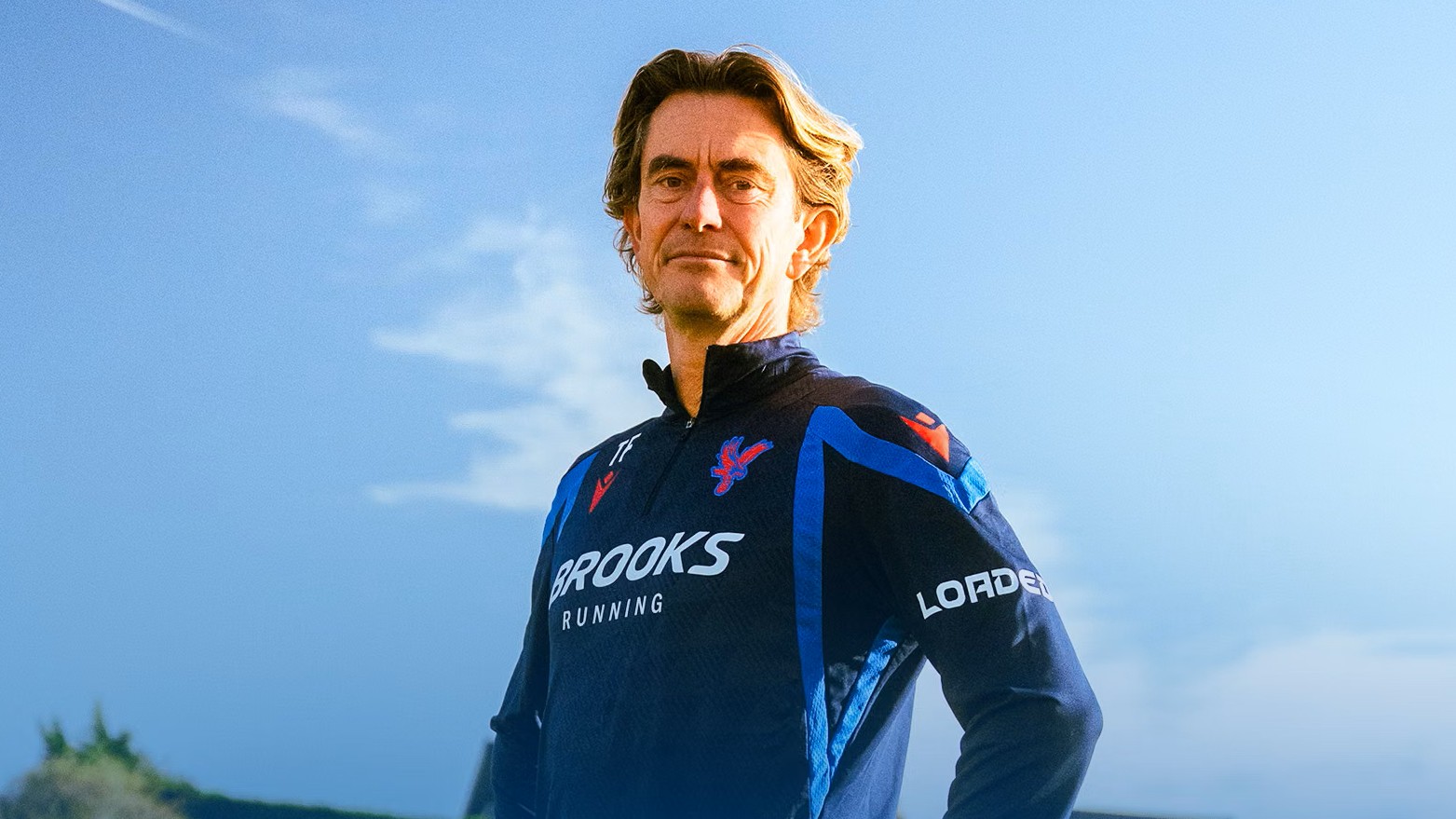
Ever since Thomas Frank’s rumoured arrival, speculation has been rife as to what formation and style he will employ following the Pierre Sage era.
Will Palace move to a back four, or will the 3-4-2-1 formation persist? We can draw some clues from his time at Brentford and Tottenham, although this is a new group of players that appears in desperate need of a refresh.
Sage was guilty of trying to continue the success of previous manager Oliver Glasner by utilising the same formation as the Austrian. In fairness, the Frenchman used the same system during his time at Lens and achieved incredible success, including winning the French Cup and finishing second in Ligue 1 behind only European champions PSG.
However, by the time he arrived in south London, key personnel from the Conference League-winning campaign had moved on, meaning he no longer had the players required to make the 3-4-2-1 system as effective as it had previously been.
One of the risks of that formation is the exposure left behind the wing-backs. However, the sheer quality of Marc Guehi, Maxence Lacroix and Chris Richards compensated for this. Now only the latter remains, and the responsibility of leading the defence has often looked a heavy burden for the American international.
The expectation now is that Frank will attempt to tighten Palace up defensively while giving the team greater organisation from set pieces and a better ability to deal with counter-attacks. To achieve this, a transition to a 4-2-3-1 setup could be on the cards. However, Frank has proven throughout his managerial career that he can be highly adaptable.
At Brentford, he transitioned from an attacking style in the Championship to a more pragmatic but equally effective approach in the Premier League, maximising physicality both from set pieces and in open play.
Regardless of the formation employed, physicality has always run through the spine of Frank’s teams. In west London, the likes of Ethan Pinnock, Pontus Jansson and Kristoffer Ajer formed the backbone of a resilient defensive unit, while Vitaly Janelt provided additional steel in midfield. Of course, many Premier League defenders will have nightmares about Ivan Toney bullying them for 90 minutes, and there are clear parallels with what Jean-Philippe Mateta could offer in a Frank side.
This leads me to believe that some players currently on the fringes of the squad could become increasingly important. Cheick Doucoure may be one such player. The Mali international has finally recovered, hopefully, from a lengthy spell on the sidelines through injury and could provide the strength and defensive presence in midfield that Frank typically values.
Quinten Timber is another player who could fulfil a similar role, although deploying both together may reduce some of the technical quality Palace enjoy when Adam Wharton is at his best.
Wharton himself has not quite reached the standards supporters have come to expect this season. One of Frank’s biggest tasks will be creating a system that allows the midfielder to flourish once again. For many Palace fans, the prospect of a Wharton-Doucoure partnership has long been an attractive one, and the Dane may be the manager capable of making it work.
Either way, Palace require greater strength and protection in central midfield, and Frank appears well suited to delivering both.
Should Palace switch to a back four, there are several important selection decisions to make. Dean Henderson remains the clear first-choice goalkeeper, while Tyrick Mitchell appears all but certain to retain the left-back position. Ben Chilwell offers strong competition and depth on that side.
The right-back role, however, is less straightforward. Although Anan Khalaili possesses attributes more commonly associated with a wing-back, Oscar Mingueza appears the more natural fit should Frank prioritise defensive stability.
The Spaniard arrived from Celta Vigo with a strong reputation and, in my opinion, has been one of Palace’s better performers in recent matches, including the 1-0 Carabao Cup victory over Fulham at Craven Cottage. Frank may therefore trust Mingueza’s experience and defensive discipline while Khalaili continues to adapt to the demands of Premier League football.
The central defensive pairing is also far from settled. Richards has earned his place through several seasons of consistent performances, and a difficult start to this campaign should not overshadow his overall contribution. He offers leadership and experience that few in the squad can match.
Alongside him, however, there are several contenders. Jaydee Canvot would be my preferred choice, while Axel Disasi has perhaps received more criticism than he deserves. His red card against Ipswich proved costly in a game Palace otherwise looked capable of winning, but beyond that incident it would be unfair to place the blame for Palace’s defensive struggles solely on his shoulders. Instead, he has been part of a collective that has too often made costly mistakes.
Honest Ahanor, like Khalaili, would benefit from further development and exposure through European and domestic cup competitions. Yet Canvot remains one of the club’s brightest prospects and demonstrated towards the end of last season just how talented he can be when given opportunities.
The loss of Guehi did not derail Palace’s successful push for European glory, and Canvot deserves significant credit for that. His performances against Fiorentina and Shakhtar Donetsk in particular highlighted his potential.
It is worth remembering that during Brentford’s maiden Premier League campaign in 2021/22, Frank opted for a back three. His preferred shape was often a 3-5-2, which packed the midfield and made it difficult for creative opponents to find space between the lines.
A midfield trio featuring Wharton, Timber and either Doucoure, Jefferson Lerma or Daichi Kamada certainly sounds appealing on paper. However, Palace’s current wing-back experiment has frequently looked vulnerable, which may encourage Frank to consider alternative solutions.
One area where Sage did enjoy success was in giving Kamada the freedom to make forward runs and contribute goals. Meanwhile, Yeremy Pino has grown into arguably Palace’s most dangerous attacking outlet, particularly after scoring in three consecutive Europa League matches.
Should Frank deploy three attacking players behind a lone striker, Pino could operate from the left with Kamada in the central role. However, the absences of both Ismaila Sarr and Mateta significantly reduce the threat Palace can carry.
Mateta remains suspended for the next two league matches, although he could return for next Thursday’s clash with Real Sociedad, while Sarr continues to recover from injury.
That leaves Jorgen Strand Larsen likely to lead the line against Coventry and Hull. The right-sided attacking position, meanwhile, remains less certain. Based on current form and his impact from the bench, Dario Osorio has earned an opportunity to make his first Premier League start.
Whatever formation Frank ultimately settles upon, Palace supporters should expect a side that looks significantly different from the one seen under Sage. Organisation, defensive structure and physicality have been hallmarks of Frank’s best teams, and those are qualities Palace have too often lacked over the past year.
His spell at Tottenham may not have gone to plan, but his achievements at Brentford remain the clearest indication of what he is capable of delivering at Selhurst Park.
If the Brentford version of Thomas Frank arrives in South London, Palace supporters may not have to wait long before embracing their new manager.


