
With days to go until Palace’s fourth ever FA Cup semi-final, and after looking back at 1976 and 1990 in the last couple of weeks, this week I look back at the forgotten cup run of 1994/95, an article I wrote and published out of blind optimism back in January.
It is not a season that is looked back on with any great fondness as the semi-final was marred by the tragic death of Palace fan Paul Nixon, and the league form dipped as Palace struggled to cope with fixture congestion and were relegated.
Palace are definitely not a club with a notable FA Cup history.
In a competition that has been around for nearly 150 years, we have had two particularly memorable cup runs – in 1976 and 1990, and that is about it.
But there was a third truly decent cup run, one that took place only twenty years ago, but is not treated with anywhere near the reverence of the fondly remembered progress of those great years.
So why is that 1994/95 cup run not at the forefront of our favourite Palace memories?
1976 was the classic underdog FA Cup run, where we beat a series of top tier sides all at their grounds. Oh, and Malcolm Allison was quite good at generating a little publicity.
The 1990 run was the culmination of gradual improvement, under the leadership of Steve Coppell. We had steadily improved the quality of the squad, we had seen the emergence of Wright and Bright as a great front pair, we had won the play-offs the year before, but above all, that semi-final was simply one of the greatest cup games ever, even if you did not know the context of the 9-0 defeat only a few months before.
Onto 1994/95 then.
Unlike many Palace teams that followed, the 1994/95 was a combination of youth team graduates, smart signings and solid squad players. While most of the stars of the 1990 cup final squad had left, we still had youth products Richard Shaw and John Salako, who had been supplemented by Dean Gordon, Simon Rodger, Ricky Newman, George Ndah and Gareth Southgate.
We had the experience of Nigel Martyn and Eric Young, and had made some canny signings – notably Chris Armstrong (‘Chris who‘ when we signed him from Millwall) and Chris Coleman, signed from Swansea City for only £250,000.
It was a good squad, one that had won the Championship the season before, and should have been good enough to stay up and re-establish us in the top tier.
However, the side struggled in the league and the cup run took place amid a battle to stay up, a challenge made harder by the fact that there were to be four sides relegated as the Premier League reduced from twenty-two to twenty sides.
The cup run began with a rare home tie against lower league opposition, Lincoln City, who we had also beaten in the League Cup that season. A 5-1 win was rewarded with a fourth round tie against Nottingham Forest.
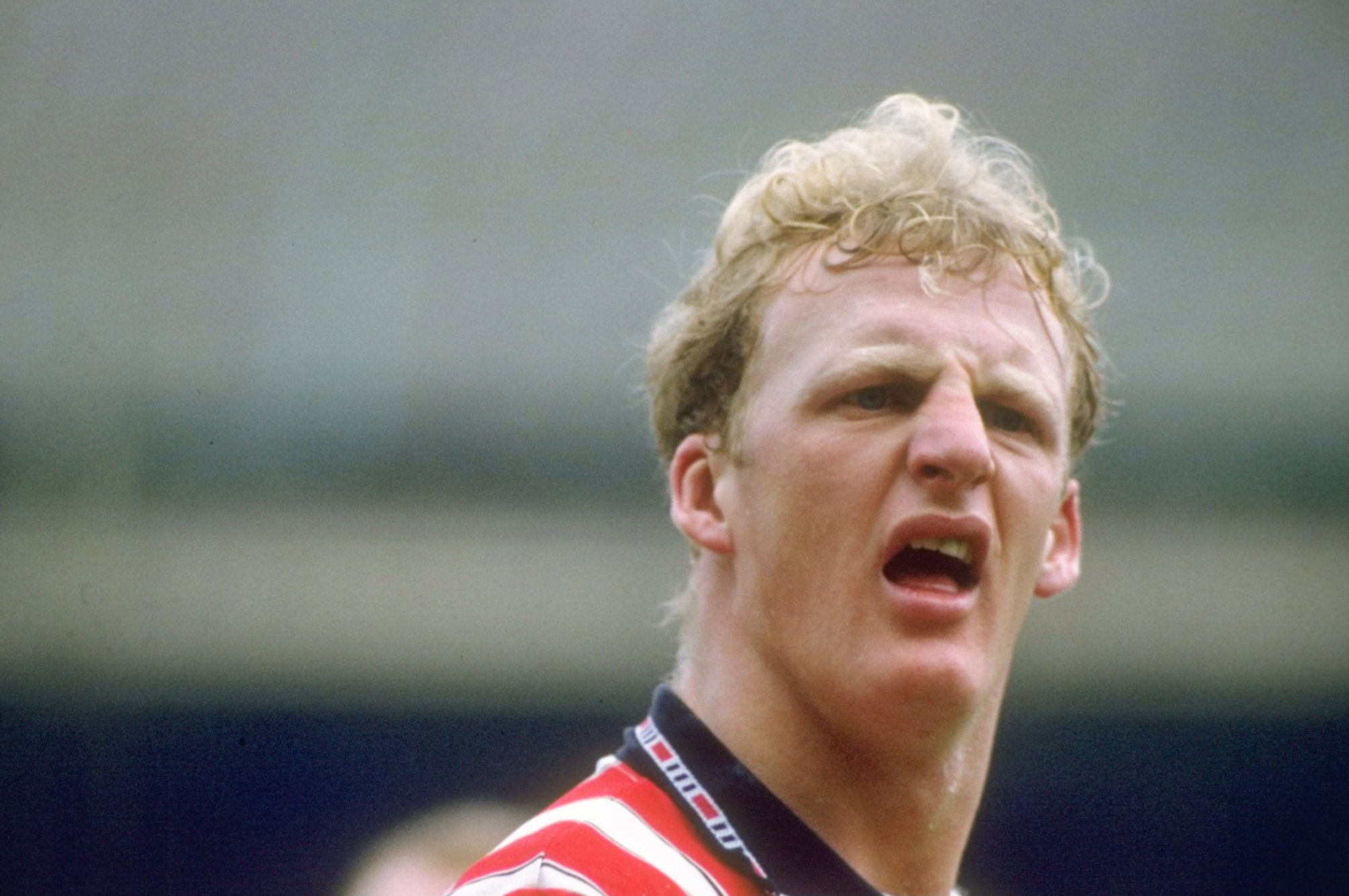
That January also saw the arrival of a new strike partner for Armstrong, a journeyman target man by the name of Iain Dowie, signed from Southampton. Dowie scored some crucial goals as the cup run progressed, starting with the winner in a 2-1 win at Forest.
The cup run then continued with a scoreless fifth round draw at Watford followed by a 1-0 win at Selhurst, thanks to a George Ndah winner. In the sixth round, we again drew the first tie this time at home to Wolverhampton Wanderers.
The replay saw perhaps the best performance of the whole run as Palace thrashed Wolves 4-1 at Molineux with four fantastic goals. Take a look:
No problem with that last goal crossing the line …
That win earned Palace a semi-final tie at Villa Park against our 1990 foes Manchester United. Once again the first game was a draw, an exciting 2-2 game with goals from Chris Armstrong and Iain Dowie. However, the result was over-shadowed by the death of Palace fan Paul Nixon as supporters clashed outside the ground before the game.
The replay took place three days later at Villa Park in a chastened atmosphere. United scored two set piece goals in the first half to put the tie beyond a tired Palace side. The most notable event of the game came in the second half when Roy Keane was sent off for stamping on Southgate after a poorly timed tackle and Darren Patterson also received a red card for his part in the mass brawl that followed.
The crowd for that replay was only 18,000, perhaps a response to the tragedy at the first game, perhaps due to the short lead time between games, and perhaps also due to the reduced glamour of the FA Cup.
By 1994/95 we were three years into the new world of Sky television, which had brought a lot more money into the game and offered far more live games for supporters to watch, if they had cable television or a dish.
The priority for Palace was to try to stay up and they failed, coming fourth bottom in the only Premier League season where that meant relegation. The backlog of games and the Easter holiday meant Palace had two league games to play within days of the replay and eight league games in the last four weeks of the season.
A twenty-two team league and the two cup runs meant that the club played a remarkable FIFTY-SEVEN games during the season, which must have taken its toll as Palace lost five of their last six games.
Sadly, relegation lead to the break-up of the team as Southgate headed off to Villa, Armstrong to Spurs, Salako to Coventry and Coleman to Blackburn.
Perhaps it is the fact that this was a team with the potential for so much more that has meant the second-best cup run in the club’s history is often forgotten.



1 comment
i remember it well, villa park was a great day out, train was rocking on the way back but Paul being murdered by the mancs put a downer over the replay and a lot of us tuned out after that.
alan
Comments are closed.